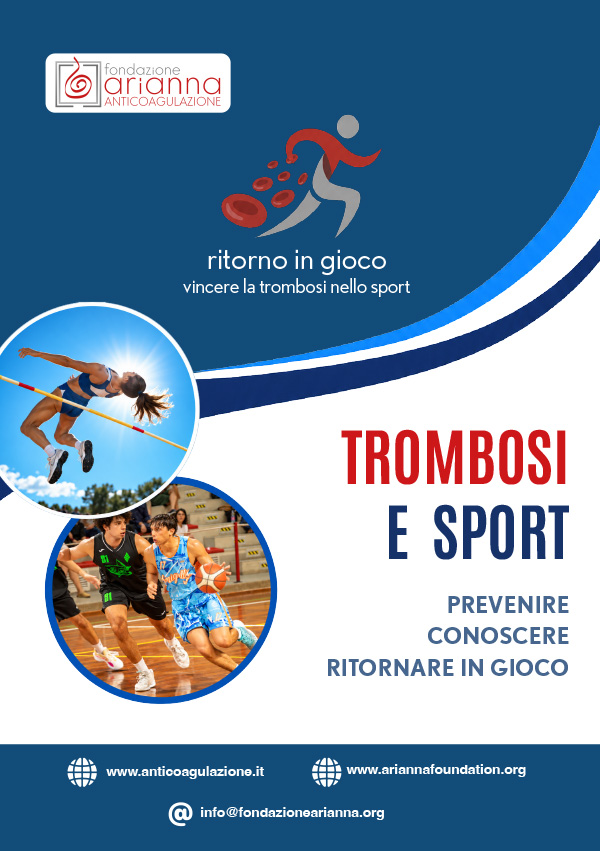



Venous thromboembolism can also affect athletes and sports people, young and old alike, representing a critical juncture for the continuation of sports activities, with significant psychological, physical, and in some cases economic consequences. A consensus document recently published by the Italian Federation of Centers for Diagnosis and Surveillance of Antithrombotic Therapies (FCSA) aims to guide clinicians help patients who intend to continue or start a sports activity, even while undergoing anticoagulant therapy. Prof. Elena Campello from the University of Padua illustrated the document and its objectives in the following video.
Conditions that require anticoagulant therapy (venous thromboembolism and atrial fibrillation) can also occur in young people and athletes. While it is well known that moderate physical activity prevents both conditions, high-intensity exertion, such as that undergone by competitive athletes, can paradoxically promote their onset.
In particular, conditions or situations that frequently occur in athletes—such as dehydration, long-distance travel, trauma with potential immobilization, and the repetitive use of certain muscle groups resulting in the compression of underlying vascular structures (such as in cyclists who develop gastrocnemius muscle hypertrophy with popliteal vein compression)—can in some cases promote episodes of venous thromboembolism, thereby requiring anticoagulant therapy.
When and how should sports activity be resumed? What are the recommended sports and which ones carry a higher risk while taking anticoagulant therapy? How should one handle “contact” sports such as soccer and basketball?
The newly published FCSA consensus document aims to provide, in light of the extensive experience gained by FCSA Centers, important practical indications for clinicians operating in a field where scientific evidence is scarce and, consequently, guidelines remain silent… apart from stating that “during ongoing anticoagulant therapy, contact and collision sports are not recommended”.
However, the discussion is much broader, and the experts who drafted the position paper sought to explore every aspect of the problem, starting from a definition of sport types based on trauma risk and moving on to suggest strategies that—also taking into account available tools (such as blood drug level monitoring and thrombophilia screening)—can guarantee individuals wishing to continue or start a sports activity (from a child who wants to play basketball to the adult professional athlete) a targeted strategy to do so safely.
Clearly, due to the lack of guidance from established guidelines, this approach requires close collaboration among clinicians specialized in different disciplines (multidisciplinary evaluation) and, above all, between the physician, the patient, and the sports club. This is essential to prevent individuals who could safely continue practicing a sport from stopping, or—even worse—individuals who need to continue anticoagulant therapy to prevent further thromboembolic events from needlessly interrupting it just to resume a sport.
Bibliography
Campello E, Cappugi C, Catalani F, Poli D, Bucciarelli P. Management of Anticoagulant Therapy in Athletes and Sportspeople: Italian Federation of Centers for Diagnosis and Surveillance of the Antithrombotic Therapies (FCSA) Position Paper. Thromb Haemost. 2025 Jun 24. doi: 10.1055/a-2632-3197. Epub ahead of print. PMID: 40499916.